
News & press releases

Five Years of Waiting Ends in Triumph: Albinama CHW Training School Celebrates First Graduation
MAPRIK, EAST SEPIK – March 27, 2026 After five years of uncertainty, sacrifice, and determination, the Albinama Community Health Worker Training School (CHWTS) has celebrated its first-ever graduation ceremony, marking a historic milestone for rural health in Papua New Guinea.

Kapuna CHW Training School Graduates First Pioneer Cohort Under Revised Certificate IV Curriculum
Kapuna Community Health Worker Training School (KCHWTS), under Gulf Christian Services (GCS), has marked a new chapter in its history with the graduation of its first cohort under the revised 2024 Certificate IV Community Health Worker (CHW) Curriculum.

Christian services meet on health issues
Story by The National:
THE Christian Health Services (CHS) is currently conducting its four-day annual general assembly conference in Port Moresby to address issues affecting the health sector of the country…
Newsletters – Health Toktok

Important Downloads


This brochure contains answers to frequently asked questions (FAQs) on the following:
- Measles
- Rubella
- Polio
- Vitamin A
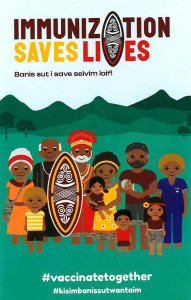
This brochure contains information on Measles, Rubella, Polio and Vitamin A, in English and Tok Pisin.
Search
Events
Newsletters (PDF)
CHS Brochures
Get our PDF brochures below and know more about us.
Downloads
Standard Treatment guidelines and Child Record books.
Our Core Values
- Prayer: Strategic prayer is an essential prerequisite for success in any program
- Christian Unity: Promotion of unity and cooperation between all denominations of Christian churches.
- Dignity: All people have intrinsic value as equally made in the image of God, and therefore deserve opportunity to know Him and to develop with dignity.
- Integration: We emphasize Christian Biblical integral development, integrating the physical, social, spiritual and mental components of the person
- Sustainable Development: Long-term solutions focus on development rather than relief, disease prevention rather than cure, equipping and empowering people to change themselves rather than doing it for them.
- Community Ownership: Programs are owned by the people and built on local initiative, as demonstrated by volunteerism and wise use of local resources.
- Multiplication: Training people to train others using concepts and appropriate technologies that are transferable.